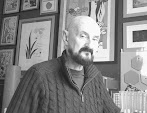
For anyone who keeps up with comments on the focolare.net website, the leading website for ex-members of the Focolare Movement, it is striking that hardly any former member dares reveal their identity. For me this is a devastating indictment against Focolare - revealing the powerful culture of fear it has instilled in members and which endures long after they have left the organisation.
Fear of what? Physical reprisals? Unlikely. Attempts to silence them by threats or persuasion? Possibly.
I believe, however, that the roots of this fear reach far deeper - it is a nameless, irrational horror cultivated in members of the fate awaiting those who fall away. I remember how, when ex-members - especially those who had been in authority - left the movement, they would be spoken of in hushed tones as lost. They were the rotten apples, in foundress Chiara Lubich's words, that would infect the barrel. Lurid tales were told of how low they had sunk. The ultimate success of oppression is when the victims internalise it - self-hating gays, women who submit to laws that subjugate them, those who are downtrodden by caste or class systems and connive with their oppressors. This is evident in those who leave the movement and secretly retain the belief fed to them in their years inside that all outside it are somehow lacking and those who leave are evil or even damned.
But there is a more concrete weapon that Focolare and other similar Catholic movements employs against ex-members who go public with their criticisms, as I learned when The Pope's Armada was published. It is that form of character assassination know as the ad hominem argument, when the character of the messenger is attacked rather than the message. Apart from being fallacious, this is the argument of weakness - the last resort of those who know they are unable to counter criticism.
In my case, the first sign of what was to come occurred even before The Pope's Armada was published. The British weekly newspaper The Catholic Herald ran a front page story announcing that a critical book on the New Catholic Movements was about to be published in the United Kingdom and I was its author. Immediately, my mother received a phonecall from an English focolarina who I had encountered both socially and professionally long after leaving the movement (we both worked in the media) and who knew that I was gay and had met my partner. Anyone who knows the internal workings of Focolare would realise that this would be done with the backing of the highest authority. She quizzed my mother about the contents of the book - fruitlessly, as my mother knew nothing at that time - and then repeatedly asked her, 'Is Gordon still with *****?' As at that time I had not yet come out to my mother (she was still recovering from years of serious depression), this caused her great distress. At best this was pointless mischief-making, at worst a kind of blackmail - as if signaling what the movement was prepared to do to blacken my name. It must have come as a shock when they read the book and found that I was totally open about being gay. I had anticipated such attacks and decided that the best weapon was complete openness for my story to make sense and indeed my sexuality was central to the account of my mistreatment at the hands of the movement. I had rightly decided that the best way to counter such an organisation - which thrives on secrecy - was to go public, withholding none of the salient facts.
Interestingly, a Vatican Cardinal, when asked if he would allow me to interview him for an article I was writing, told me that he had been 'very disappointed' in The Pope's Armada. My criticisms, he opined, should have been limited to the private sphere, within the confines of the Catholic Church. Such advice now sounds hollow, even sinister after all the paedophile coverups of recent years. But it illustrates the mind-set of Rome - don't hang out your dirty linen in public. There is another reason why the Cardinal's remark was disingenuous: the Vatican deliberately ignores the evidence of ex-members of organisations. Some years ago I interviewed the postulator of the cause of Saint Jose Maria Escriva, founder of Opus Dei. The postulator was a priest member of Opus Dei (one of the changes Pope John Paul II had made to speed up the canonisation process was not to have an independent postulator and also to abolish the Devil's Advocate, whose task was to do his best to oppose the candidate's canonisation). This priest told me he had been 'very frightened' (his words) that ex-members might come forward with evidence against Escriva. He breathed a sigh of relief when the Cardinal who presided over the Congregation for Canonisations informed him that they had a policy of ignoring the evidence of ex-members.
The reaction of Focolare to the publication of The Pope's Armada lacked the refinement of the Vatican. They forbade members of the movement from reading it, backing up the ban with unrestrained ad hominem attacks, designed to undermine my credibility. They were told that I was a homosexual, had been to see a psychiatrist and was divorced. The majority of the population, at least in western society, would probably respond, 'So what?' For the sheltered members of the Focolare Movement, however,these accusations would be deeply shocking. The irony, however, was that all these points were mentioned by me in the book. Indeed, I had been sent to see a psychiatrist by my superiors in the movement in the hope that they could change my sexual orientation and marriage had also been their suggested solution - so they were to some extent implicated in my divorce as well! Subsequently, these accusations have been elaborated into libelous allegations such as one that I read in a comment on focolare.net that I had 'abandoned' my wife and 'three' children ( I have two, as far as I am aware, and still enjoy a close and rewarding relationship with them). Of course, none of these accusations have any bearing on the truth or otherwise of The Pope's Armada.
Such attacks were aided and abetted by traditionalist Catholic journalists. When The Pope's Armada was first published in the UK, it had the misfortune of being reviewed in two quality daily newspapers by prominent Catholic writers well to the right of the Catholic spectrum. One, a novelist and traditionalist Catholic, compared me to ex-nuns and monks in the 19th century who wrote salacious, largely fictional, accounts of their supposed experiences in Catholic religious orders. These accounts were probably the work of militantly anti-Catholic Protestants. The implications was that my book was also a work of fiction written with a similar purpose. I don't think any self-respecting journalist would attempt a trick like this today, but at that time the New Movements were largely unknown, even among Catholics. Nevertheless, this was just a more subtle, seemingly erudite, version of an ad hominem attack and equally weak as it did nothing to counter the facts revealed in the book. Obviously these rather over-zealous right-wing Catholics were anxious to defend Pope John Paul II - who had been such a keen supporter of the movements - and avert scandal.
Most critical reviews of exposes written by ex-members of Catholic Movements (eg Opus Dei) employ the same argument: ex-members are not to be believed because they are just settling old scores This was dramatically disproved in the case of Vows of Silence which exposed the crimes of Father Maciel, founder of the Legionaries of Christ - indeed it opened a can of worms and the truth turned out to be much worse. I believe this is the case with the New Movements. They are so impenetrable, only ex-members have had access to the evidence. The Pope's Armada also opened a can of worms and since I wrote the book I have heard many more stories, all much worse than anything that appeared in the original British edition of the book. It is important that these stories should be told in full and without fear. I can understand that for many ex-members the thought that their most intimate secrets, confided to groups or individuals while they were members, might be made public would be a source of concern. But I am convinced that the best weapon of those who have suffered at the hands of the Movements and experienced their worst aspects is total openness - ultimately far stronger than their weak, cowardly and, above all, deeply un-Christian ad hominen attacks.
Friday, 11 November 2011

Wednesday, 2 November 2011
'A Giant Awakens - The Movementisation of the Church (Part 1)
In a previous post on the foundation of The Pontifical Council for Promoting New Evangelisation last year (July 2010), I pointed out that, for the first time, the Vatican was providing an official, tailor-made, centralised structure for the New Catholic Movements. Both John Paul II and Benedict XVI had taken every opportunity to express their enthusiasm for the New Movements - particularly at their vast Pentecost meetings with members of the Movements in 1998 and 2006. The Movements had also been favoured in a less visible but more significant way with many appointments of members to official Vatican bodies such as the Pontifical Councils, Academies and Vatican Congregations. The new structure, however, will mean that the power of the New Movements can be harnessed more effectively than ever to Vatican-led projects so that the New Movements and the official Church become virtually synonymous. As I predicted over fifteen years ago in The Pope's Armada, the New Movements permit the Vatican to act at grass-roots level on a global scale. They provide access to every aspect of civil society through the action of lay men, women and children, who do not necessarily disclose their allegiance to the Vatican.
Given that Cardinal Ratzinger had been a vocal supporter of the Movements as John Paul II's theologian-in-chief, even to the extent of hailing them as the only good thing to come out of the Second Vatican Council, it was always on the cards that consolidating their position within the structure of the Church would be the keynote of his reign as Benedict XVI. Unlike John Paul's 'charismatic' and rather piecemeal approach to his various enthusiasms, Benedict's moves have been slower and more considered, but likely to have more impact in the long run (and of course a traditionalist like Benedict is well aware that the Church thinks and acts 'in centuries'). With his latest pronouncements, it can be said that the Movementisation of the Catholic Church is underway, confirming what the Pontiff once suggested - also while still a Cardinal - that today belonging to a Movement is the most effective way - not to say the only way - to be a Catholic.
On 17th and 18th October, the new Council held a meeting in Rome which brought together members of 33 episcopal conferences with 400 representatives of New Movements and ecclesial communities. Numbers were swelled by 10,000 younger members of the Movements. The Pope met briefly with the delegates on the first afternoon of the event and the next day for mass, hailing them as the 'new evangelisers'. The President of the Council, Archbishop Fischiella, briefed the gathering on the new organisation's aim of countering secularistion both inside and outside the Church - even among the clergy! - via an explicit proclamation of the gospel. In his speech on 17th October, Benedict reiterated his desire that the primary field of mission should be the traditionally Christian countries - i.e. 'de-Christianised' Europe.
Leaders of the Movements - including Kiko Arguello, founder of the Neocatechumenate, Father Julian Carron, leader of Communion and Liberation, Adriano Roccucci of San Egidio, and Salvatore Martinez of Renewal in the Spirit - had a high profile at the event, addressing the delegates and greeting the Council's initiative enthusiastically. A report on the conservative website Zenit, bullishly entitled its report on the meeting, 'A Giant is Awakening - New Evangelisation Flows Out of Rome'.
The establishment of the new Council has been followed by an even more significant papal pronouncement - that next years Synod of Bishops will have as its subject 'New Evangelisation for the Transmission of the Christian Faith'. Speaking of the aims of the Synod on the first anniversary of the new Council last July, its President, Archbishop Fisichella, said 'We must try to give a unity to all this...listening to all these ecclesial realities - old and new - that, in these last years, have rolled up their sleeves and really implemented these methodologies of new evangelisation with great results.'
It is above all the effectiveness of the methods of the New Movements that has endeared them to Rome. The Vatican has already learned a few lessons from these organisations and imitated their methods with spectacular success. The vast World Youth Days and the Meeting of the Holy Father with Families were inspired by Focolare's Genfests and Familyfests respectively, both of which John Paul II experienced first hand, and have been hailed as quintessential examples of the new evangelisation. More recently, Benedict XVI cited Focolare's business venture, the Economy of Communion as an example to be followed in his encyclical Caritas in Veritate. He has also recently called for dialogue with non-believers, another concept borrowed from Focolare. The first practical initiative of the new Council will be the Metropolis Mission, which will target 11 major European cities during Lent 2012. This draws directly on the experience of the New Movements which have shown themselves particularly effective in urban settings. As Archbishop Fisichella has emphasised, the 'new evangelisation cannot be carried out...without new evangelisers' - ie the Movements.
This is stage one of Rome's plans for mobilising the Movements as its front line in the battle against secularisation. In my next post, I will outline stage two - even more sweeping, involving the entire Chruch.
Tuesday, 25 October 2011
Rome must respect its own laws
October 2011 The Apostolic Visitation of the Regnum Christi movement - the lay off-shoot of the Legionaries of Christ order - has just been concluded. Such a major investigation is usually carried out only in grave circumstances, when the Vatican suspects or has proof of, serious deviation within a religious congregation or association in the Church. In this case it was the overwhelming evidence of, according to a Vatican communique issued in 2010, 'the very serious and objectively immoral behaviour of Father Maciel [the Mexican founder of Regnum Christi and the Legionaries of Christ, which] sometimes resulted in actual crimes, and manifests a life devoid of scruples and of genuine religious sentiment.'
For years, the Vatican swept aside well-documented accusations from former priests and seminarians of the Legionaries who claimed to have been sexually abused by Maciel. Not only did these prove to be well-founded, but it was also established that he had fathered children by at least two women, while masquerading as the saintly Founder of the order. (See Vows of Silence: The Abuse of Power in the Papacy of John Paul II by Jason Berry and Gerald Renner) Maciel's chief protector was John Paul II who was a great admirer of the priest and his traditionalist order and lay association. Benedict XVI, who as Cardinal Ratzinger headed the Congregation for the Doctrine of the Faith to whom the complaints had been addressed, was fully aware of the serious accusations and the compelling evidence to back them up but took no action during John Paul's lifetime. Apparently, for Ratzinger, offending Pope John Paul II (sometimes referred to as the 'the Great'!) or his favourites outweighed the horrific wrongs that had been done to generations of boys and young men who had joined the Legionaries of Christ in good faith. Clearly it was felt that the good done by these organisations outweighed any wrong-doing and there was a danger of harming their reputation. To give Benedict his due, one of his first actions in office was to take action against Maciel personally and later to authorise the Apostolic Visitations of the Legionaries of Christ and Regnum Christi.
Given the gravity of the accusations and the publicity they had received - particularly through the book Vows of Silence - and the high profile of the Legionaries and its close association with the late Pontiff, Rome could hardly justify delaying such an investigation any longer. Furthermore since this particular scandal involved the abuse of children, an issue which has convulsed the Church worldwide and severely damaged the Church's credibility, it had to be addressed sooner or later. Other New Catholic Movements have also been the subject of complaints to Rome, often from authoritative figures such as local bishops, but, as they concerned less controversial and high-profile issues such as divisions in parishes and families , alleged brain-washing, secrecy, unreasonable demands for money etc., it was easier for Rome to sweep them under the carpet and indeed pressurise the local churches into accepting the Movements. It would be fascinating to see what aberrations a Vatican enquiry would unearth in these other organisations. One complaint that was levelled at Regnum Christi by the Apostolic Visitation, for example, was that superiors pressurised members into manifesting their consciences, that is into revealing secrets that properly belong in the context of confession. This is in direct contravention of article 630 of Canon Law which states that 'Superiors...are forbidden in any way to induce the members to make a manifestation of conscience to themselves'. In my experience this was the norm in the Focolare Movement and indeed, in the process of leaving the movement I was expected to do so with a number of authority figures to my considerable distress. In a more recent case, a member of Focolare who confessed to a superior that he had homosexual experiences in the past was summoned before a kind of kangaroo court at the Centre of the Movement in Rome and bombarded by several leaders of the movement with questions on the nature of his sexual feelings and temptations. I have heard from members of the Neocatechumenate that this kind of public examination on intimate matters of conscience is commonplace.
It would be interesting to put together a dossier of just how common this practice is within the New Movements and I would welcome any experiences that former members would be willing to share. Identities would, of course, be safeguarded where necessary.
Monday, 19 July 2010
E Gesu Pianse (Italian translation of post 'Jesus Wept')
Gesu pianse...
Secondo un'articolo che e apparso in un'edizione speciale del giornale cattolico italiano Avvenire (19 marzo 2008) per segnalare la morte di Chiara Lubich, 'Hanno [i focolarini] deciso, "Niente lacrime a Roma [ai funerali della Lubich] perche non e morta. Vive per sempre in tutti noi." ' Piuttosto che dare una testimonianza della vita eterna ai milioni che hanno seguito la trasmissione in diretta su RAI 1 o sull'internet (e si suppone che questo era l'intenzione dei capi focolarini) questo atteggiamento stoico ha prestato una strana atmosfera di disagio agli avvenimenti. Un mio amico che non ha mai avuto contatti col movimento ma e familiare con le sue idee, mi ha detto che gli sembrava che i membri erano cosi abituati a ricevere ordini su come sentire e reagire che in queste circostanze straordinarie non sapevano come reagire affatto. In realta, avevano ricevuto istruzioni precisi su come comportarsi ed era questo che ha dato alla ceremonia l'aria di stranezza e distacco.
Io invece, un ex-membro che sente ancora affetto per tanti membri dell'Opera e certamente per la fondatrice - nonostante le mie tante obiezioni alle pratiche del movimento - era commosso fino al pianto e l'ho trovato molto strano che quelli che si vantano di essere i suoi seguaci piu fedeli sono rimasti impassivi. Solo don Oreste Basso, uno dei primi focolarini ed il 'co-presidente' del movimento dei Focolari, ha avuto un momento di commozione quando ha ringraziato i pezzi grossi presenti nel suo ruolo di rappresentate dell'Opera. Ma dall'altra parte, i vecchi hanno la tendenza alle lacrime ed e riuscito in poco tempo a calmarsi. Le prime compagne di Chiara, Eli Folonari e Graziella de Luca, invece hanno scherzato insieme fuori la Basilica dopo la ceremonia come fosse stata una Giornata od una Mariapoli molto riuscita.
I funerali della Lubich hanno messo in rilievo uno dei difetti piu grossi del movimento dei Focolari: la pressione sui membri di distaccarsi dalle loro emozioni. In questo caso, la pressione era cosi forte che la reazione spontanea della maggioranza dell'umanita in circostanze simili era assente. Suor Madeleine, fondatrice delle Piccole Sorelle di Gesu, disse una volta che prima di essere cristiani bisogna essere umani; ma questo e piuttosto difficile per i focolarini per i quali il termine stesso 'umano' e negativo!
I psicologi direbbero che il distacco dai propri sentimenti promosso dal movimento e patologico e molto pericoloso per la salute mentale. Difatti, puo darsi che questo sia la causa principale della depressione e malattia mentale che e cosi comune nel movimento a tutti livelli. Adesso che e scomparsa la fondatrice, un'indagine aperta e profonda su questo aspetto potrebbe essere di grande aiuto sia per i membri correnti sia per gli ex.
La vera buona novella non e certa una recetta per la malattia mentale. Se e veramente parola di Dio, deve essere proprio l'opposto. Mi ricordo, durante il mio soggiorno a Loppiano, del funerale di una ragazzina, figlia di focolarini sposati, che si e spenta in seguito ad una malattia ereditaria molto dolorosa. C'era un'amtosfera di celebrazione maniacale e neanche i genitori o fratelli hanno mostrato il minimo segno di tristezza o di lutto.
Mi domandai allora, ed mi sono domandato durante gli anni successivi, perche nessuno si e accorto che questo e lo stile dei focolarini e non del vangelo. Gesu era certamente in contatto con le sue emozioni e non temeva di mostrarle apertamente. In particolare, pianse sulla morte di Lazzaro, anche se doveva sapere che possedeva il potere di fargli risorgere.
Questo e sicuramente la reazione buona, umana alla morte di una persona cara. Ed e questo il cuore del problema. Cos'e la natura dell'amore predicato dai focolarini se e cosi disincarnato che sente nessuna reazione alla morte di una che ama al punto di essere pronto a morire per ella? Nella vita, come nella morte, la reazione alla perdita di amici che si suppone di essere cari e ugualmente fredda - come nel caso di membri che lasciano il movimento per esempio. E possibile che l'amore vero e compatibile con un tale mancanza di emozione?
Mi ha turbato per molto tempo che la virtu evangelica della compassione non trovava posto fra gli insegnamenti del movimento. Ma leggiamo che Gesu aveva compassione sulla folla e che pianse su quello che stava per avvenire a Gerusalemme. Si paragonava perfino ad una gallina che raccoglie i pulcini intorno a se: un'immagine piena di tenerezza ed emozione. Ma come possiamo aspettare che i foclarini riescono a 'sentire' o 'soffrire' con gli altri se mancono cosi tanto di fiducia nei sentimenti? Mi ricordo come, poco temo dopo essere uscito dal focolare, era commosso da un programma all TV, o forse era un film, che mi fece piangere per la prima volta in quasi dieci anni - il periodo durante il quale facevo parte del movimento. Non mi ero commosso in tutti quegli anni, ma di colpo i miei sentimenti erano liberati dalla loro prigione.
Ma com'e possibile obbedire al commandamento di Gesu 'Piangete con quelli che piangono' se non riusciamo a piangere noi stessi? Piuttosto che seguire la linea stoica dei focolarini, preferisco prendere la via indicata da Gesu: 'Beati quelli che fanno cordoglio perche saranno consolati.'
Jesus Wept...
(This is an article I wrote immediately after watching the live internet broadcast of the funeral of Chiara Lubich, Founder of the Focolare Movement.)
According to an article that appeared in a special edition of the Italian Catholic daily Avvenire (19 March 2008) to mark the death of Chiara Lubich, ‘They [the focolarini] decided, “No tears in Rome [at Chiara’s funeral] because she is not dead. She lives for ever in all of us.” ' Rather than giving a witness to the millions who followed the live broadcast on Italian television or the internet feed - which was presumably what the Focolare old guard intended - this stoical approach lent an eerie atmosphere of uncertainty to the proceedings. A friend of mine who has had no contact with focolare but is familiar with its ethos, had the impression that the members were so used to being told what to feel and how to react that in these unprecedented circumstances they simply didn’t know what the appropriate response should be. In reality, they had been instructed exactly how to behave and it was this very fact that gave to the event its strange, unengaged quality.
As an ex-member who still feels affection for members of the movement and certainly for Chiara, despite my many criticisms of the organisation, I was moved to tears by the funeral and found it odd that those who profess themselves to be her most devoted followers remained dry-eyed. Only Oreste Basso, one of the first focoalrini and the ’Copresident’ of Focolare, broke down when he approached the altar to thank the distinguished guests on behalf of the movement, but then old men are notoriously prone to tears and he struggled successfully to regain his composure. Chiara’s first companions Eli Folonari and Graziella de Luca, on the other hand, had a jolly chat outside the basilica at the end of the funeral as though they had just concluded a successful Day Meeting.
Chiara Lubich’s funeral shone a very public spotlight on one of the Focolare Movement’s most serious shortcomings: the detachment from feelings encouraged in members. In this case, it was so strong that the spontaneous reaction most human beings would experience in such circumstances was absent. Sister Madeleine, founder of the Little Sisters of Jesus, once said that in order to be Christian, it is necessary to be human first; but that is rather difficult in the Focolare Movement in which ‘human’ is a negative term.
Psychologists would say that the detachment from ones emotions that this Movement promotes is pathological and dangerous. Indeed, it could well be the principal reason for the prevalence of depression and mental illness to be found in Focolare from the top down. Now that the Founder is dead, current and former members of the movement would benefit greatly from a probing and truthful investigation into this aspect.
The genuine gospel message is certainly not a recipe for mental illness . If it is truly God’s Word, it should be just the opposite. I remember attending the funeral of a child at Loppiano, the daughter of married focolarini, who had died after suffering terribly from a painful congenital illness. The atmosphere was one of manic rejoicing and not even the parents or siblings let slip any indications of sadness or mourning.
I wondered then, and I have wondered down the years, why no one pointed out that this is the Focolare approach and certainly not that of the gospel. Jesus was very much in touch with his emotions and did not shrink from showing them in public. In particular, he wept over Lazarus’ death, even though he must have known he had the power to raise him up.
This is surely the good, human reaction to the loss of a loved one. And here is the nub of the problem. What exactly is the nature of the love that Focolare preaches if it is so disembodied, so disincarnate, that it feels no reaction to the loss of someone one claims to have loved to the point of being ready to lay down ones life for them? In life, as in death, the reaction to the loss of close friends is remarkably cold - as in the case of members who leave the movement for example. Can real love be compatible with such a lack of feeling?
I have long been troubled that the gospel virtue of compassion was never mentioned in Focolare teachings. Yet we read that Jesus had compassion on the multitude and that he wept over the fate of Jerusalem. He even compared himself to a mother hen gathering her chicks: a more tender and emotion-filled image would be hard to find. Yet how can the focolarini be expected to ‘feel’ or ‘suffer’ with others if they mistrust feelings so much. I remember how, shortly after leaving Focolare, I was moved by a television programme or a film which made me weep for the first time in nearly ten years. My emotions had been released from their prison. How can we obey Jesus’ command to ‘Weep with those who weep’ if we are unable to weep ourselves? Rather than follow the stoical line of the movement, I prefer to follow the path that Jesus indicated: ‘Blessed are those who mourn for they shall be comforted.
Subscribe to:
Posts (Atom)